


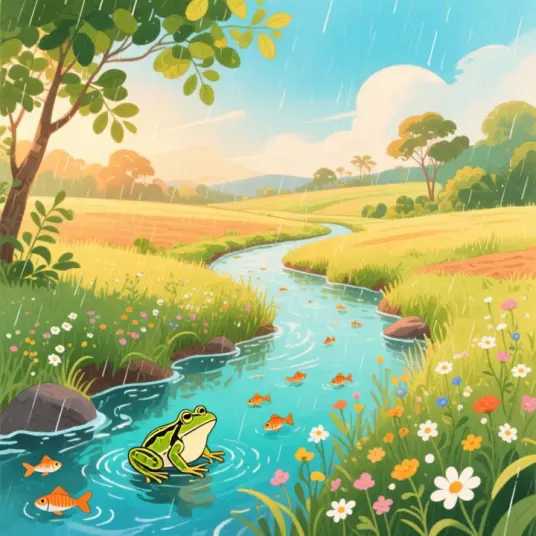
O Ribeirão (The Stream) 1 by Célia

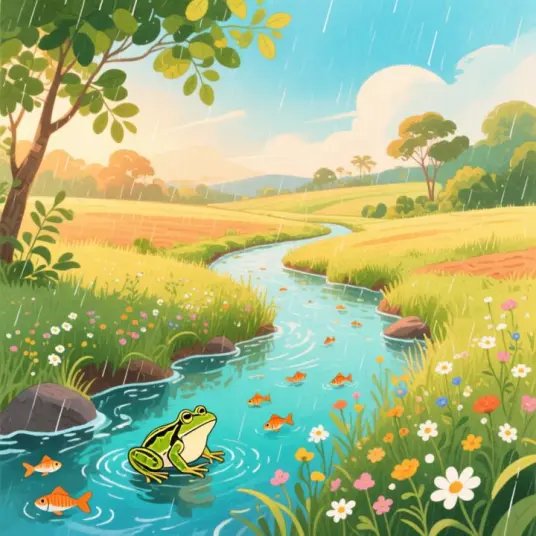
Célia
Aug 20, 2026
O Ribeirão (The Stream) 1
Brazilian Folk
[Chorus] O tralalalalá, lá o, o tralalalalá, lá o, o tralalalalá, o tralalalalá, o tralalalalá, lá o [Verse 1] As flores já não crescem mais, até o ribeirão secou, o sapo se mandou, o lambari morreu porque o ribeirão secou, o sapo se mandou, o lambari morreu porque o ribeirão secou [Chorus] O tralalalalá, lá o, o tralalalalá, lá o, o tralalalalá, o tralalalalá, o tralalalalá, lá o [Verse 2] Agora que já choveu, até o ribeirão encheu, o sapo já voltou, o lambari chegou porque o ribeirão encheu, o sapo já voltou, o jacaré chegou porque o ribeirão encheu [Outro] O tralalalalá, lá o, o tralalalalá, lá o, o tralalalalá, o tralalalalá, o tralalalalá, lá o
O Ribeirão (The Stream)
Genre
Brazilian Folk
Gist
A cyclical narrative about the interdependence of nature and water, told through the lens of a dried-up stream and its ecosystem. The song celebrates the transformative power of rain, depicting how the return of water revives flora and fauna that had withered and departed during drought.
Themes
- Environmental cycles and natural resilience
- The fragility and vitality of ecosystems
- Drought and renewal as metaphors for hardship and hope
- Community restoration through abundance
- The interconnectedness of all living things in nature
Inspiration
Drawing from your original prompt, this composition captures the stark contrast between ecological devastation and regeneration. The repetitive, playful "tralalalalá" refrain contrasts beautifully with the sobering imagery of dying flowers, departed frogs, and dead fish, creating a folk narrative that celebrates how a single rainfall can restore an entire ecosystem to life—a powerful meditation on nature's cycles and humanity's dependence on environmental balance.
Emotional Impact
The song evokes a bittersweet emotional journey, beginning with melancholy and loss before transitioning into joy and celebration. The infectious, whimsical chorus provides rhythmic levity that makes the environmental message accessible and memorable, while the narrative arc—from desolation to abundance—leaves listeners with a sense of cautious optimism and appreciation for nature's regenerative capacity.